

I’ve styled working women for years, and the one request I hear more than any other is simple: “I don’t have time to go home and change before dinner.”
That’s exactly the problem office to evening outfit ideas solve. It’s not about owning two wardrobes — one for the office and one for after hours. It’s about building outfits that transition with a few smart swaps, so you look just as sharp at a 9 PM dinner as you did at your 9 AM meeting.
In this guide, I’m breaking down the exact system I use with my clients: what to build your outfit around, the quick transition tricks, and the science behind why certain pieces do double duty better than others.
Quick Summary Table
| What You’re Solving | Quick Answer |
|---|---|
| Office to dinner without changing | Build your base outfit in structured, versatile pieces, then swap 2-3 small items |
| Fastest transition trick | Change your shoes and jewelry — this alone shifts the whole outfit’s mood |
| Best fabric for all-day wear | Wrinkle-resistant blends like ponte knit or a cotton-spandex mix |
| Interview-to-promotion styling | Keep a consistent “signature” color or piece as your career wardrobe evolves |
| Biggest workwear mistake | Choosing comfort over structure — a slightly tailored fit reads as more competent |
Tools & Materials You Need
This is the actual starter kit I recommend before building a 9-to-9 wardrobe.
- 2-3 structured blazers in neutral tones (black, navy, camel) — $40-60 each
- 1-2 wrap or sheath dresses that photograph well in both daylight and evening lighting — $35-50
- 1 pair of tailored trousers with a slight stretch for all-day comfort — $30-45
- A small evening bag that fits inside your work tote — $20-35
- 1 statement jewelry piece (bold earrings or a necklace) that instantly shifts an outfit’s mood — $15-25
Total starter investment: roughly $180-250 for a wardrobe built to move seamlessly from meetings to dinner reservations.
Step-by-Step Guide to Building Your 9-to-9 Wardrobe
Step 1: Choose a Base Outfit That Works Both Ways
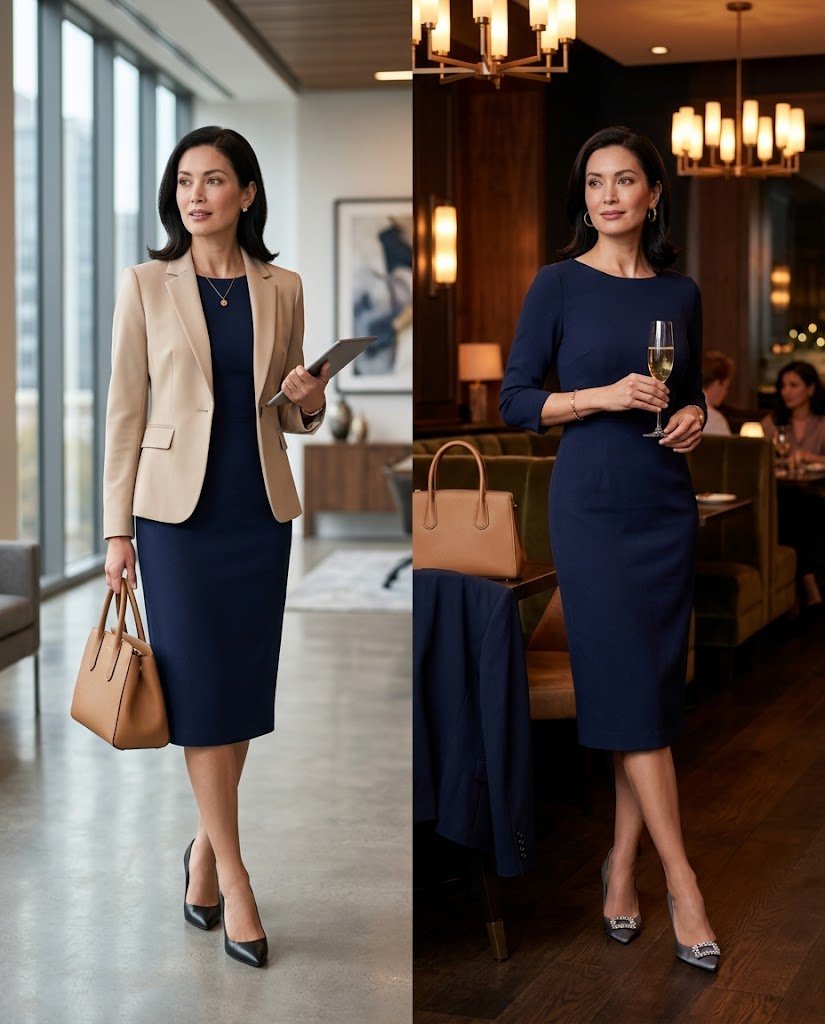
I always tell clients to start with a sheath dress or tailored trousers with a fitted top. These two silhouettes hold their shape from morning meetings through evening plans without looking wrinkled or worn out.
Avoid anything too casual or too formal at the base level — you want a foundation that reads as “put-together” in any lighting.
Step 2: Keep a Transition Kit at Your Desk
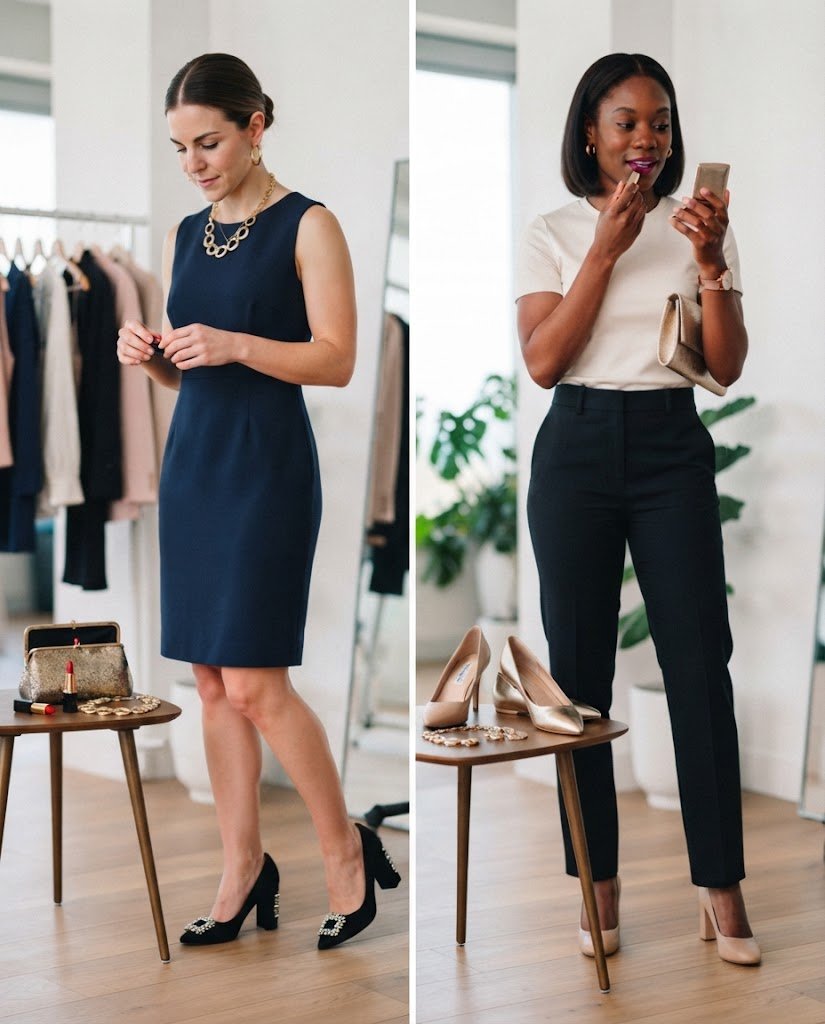
This is the single biggest time-saver I give my clients. Keep a small bag at your desk with:
- A pair of heels or dressier flats
- One statement jewelry piece
- A small clutch
- A lip color for evening
When 5 PM hits, you swap these four things in under three minutes and you’re dinner-ready.
Step 3: Master the Blazer Swap
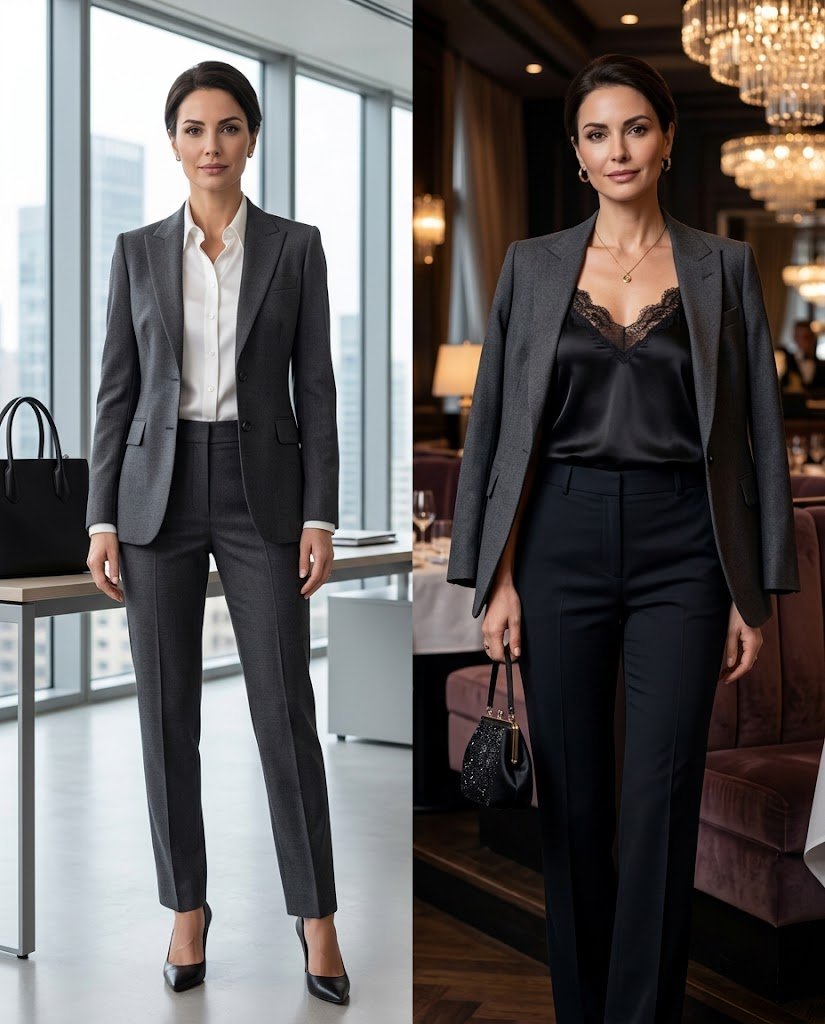
Your blazer does more work than any other piece in your wardrobe. Wearing it buttoned and structured reads as office-appropriate. Taking it off, or wearing it open and loose over the same outfit, instantly shifts the whole look into evening mode.
Step 4: Build Your Career-Stage Wardrobe Around One Signature
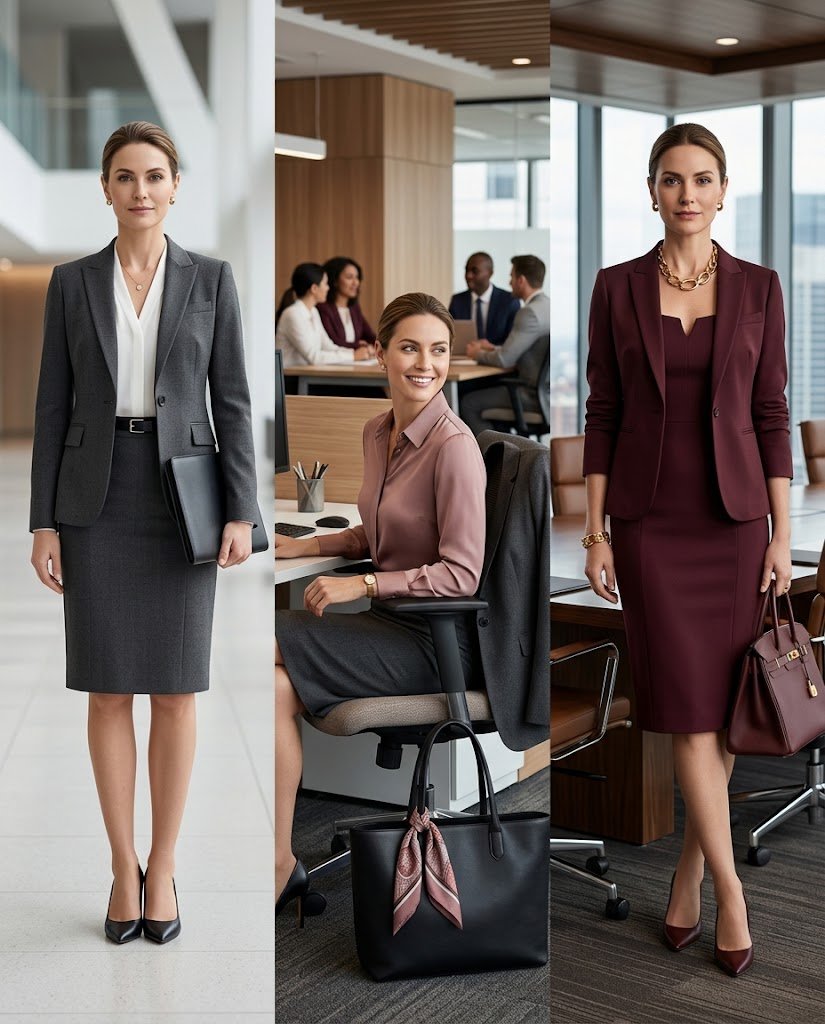
For interviews, promotions, and everything in between, I recommend keeping one consistent element — a color, a piece, or an accessory — as your wardrobe evolves. This builds visual recognition over time, which matters more in professional settings than people realize.
Interview stage: Structured blazer, neutral tones, minimal jewelry First 90 days: Same structured base, slightly more personality through color Promotion-ready: Elevated fabrics (silk blends, tailored cuts), one signature accessory that becomes “your thing”
Optical Tricks & Pro Styling Hacks
- Swap flats for heels to instantly shift an outfit’s formality without changing anything else
- Unbutton your blazer and push the sleeves up for a relaxed, evening-appropriate version of the same piece
- Add a bold lip color — this single change reads as “evening” faster than almost any wardrobe swap
- Switch your work tote for a small clutch to visually signal the shift from office to social
- Layer a delicate necklace over a crew neck top to soften a daytime look for evening
Surprising Facts & Science Behind Workwear That Works
- Perceived competence research shows that structured clothing with defined shoulders and a tailored waist is consistently rated as more “authoritative” by observers, which is why blazers remain a workwear staple across industries
- Color psychology data indicates that navy and deep jewel tones are perceived as more “trustworthy” in professional settings than black, which reads as slightly more severe
- Fabric recovery studies show that ponte knit and cotton-spandex blends return to their original shape up to 30% faster after sitting for long periods, which is exactly why these fabrics dominate travel and workwear capsules
- The “spotlight effect” in accessory placement — a bold piece near the face (earrings, a necklace) draws attention upward first, which is why swapping jewelry alone can shift an entire outfit’s perceived formality
Frequently Asked Questions
How can I transition my outfit from office to dinner without going home first? Keep a small transition kit at your desk — heels, statement jewelry, a clutch, and a bolder lip color. Swapping these four things takes under three minutes.
What’s the most versatile piece for a 9-to-9 wardrobe? A well-tailored sheath dress or a structured blazer works hardest, because both hold their shape and can be dressed up or down with accessories alone.
How should my workwear change as I move from interview to promotion? Keep one consistent signature element as your wardrobe evolves, while gradually elevating fabric quality and adding more personality through color and accessories.
What fabric works best for all-day, transition-ready outfits? Ponte knit and cotton-spandex blends hold their shape and resist wrinkles far better than pure cotton or linen, making them ideal for long workdays.
Final Thoughts
The working women I’ve styled who feel most confident aren’t the ones with the biggest wardrobes. They’re the ones who’ve built a small, smart system that moves with their day instead of against it.
Office to evening outfit ideas aren’t about doing more — they’re about doing less, more strategically. One base outfit, a few swaps, and you’re ready for whatever the day throws at you.
Start with your transition kit this week. Once you feel how much time it saves, you won’t go back to changing twice.