
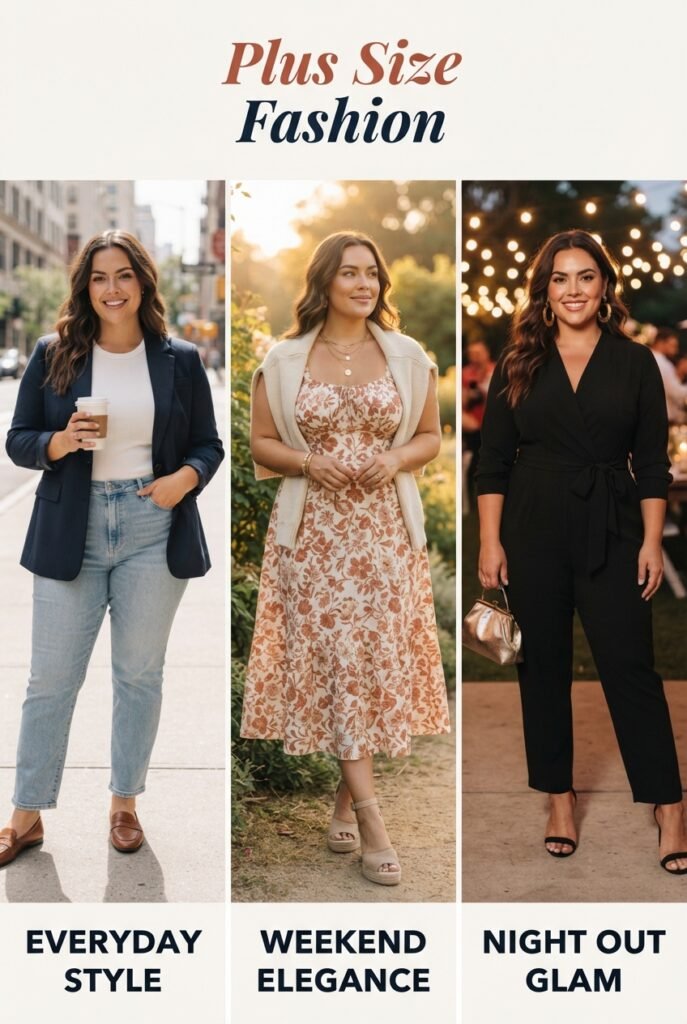
I’ve styled plus-size clients for years, and the question I get asked most isn’t “what should I wear?” It’s “what am I allowed to wear?”
Let’s clear that up right now. There is no rulebook. Plus size fashion tips that actually work aren’t about hiding your body — they’re about understanding proportion, fit, and fabric so your clothes work with you instead of against you.
In this guide, I’m breaking down the exact system I use with clients: what to buy, how to style it, the science behind why certain cuts flatter, and the myths you can finally stop believing.
Quick Summary Table
| What You’re Solving | Quick Answer |
|---|---|
| Finding flattering silhouettes | Look for structured shoulders, defined waistlines, and fabrics with slight stretch |
| Building a capsule wardrobe | Start with 5-6 versatile basics in your best-fitting silhouette, then layer and accessorize |
| Common styling mistake | Buying clothes one size too big “to be safe” — proper fit always looks more polished |
| Best fabrics to prioritize | Structured cotton blends, ponte knit, and fabrics with 3-5% spandex |
| Myth worth breaking | “Horizontal stripes are off-limits” — placement and stripe width matter far more than the stripe itself |
Tools & Materials You Need
Here’s the actual checklist I give my clients before we start building a wardrobe together.
- 2-3 structured tops with defined shoulders or a tailored cut — $15-25 each
- 1-2 wrap or A-line dresses — these are the most universally flattering silhouettes across body shapes — $25-40
- 1 well-fitted pair of dark denim in a rise that sits comfortably at your natural waist — $30-50
- 1 structured blazer or cardigan to add definition to looser outfits — $25-40
- A tailor’s measuring tape — the single most underrated styling tool, because sizing charts lie and your actual measurements don’t
Total starter investment: roughly $150-200 for a wardrobe built around your actual proportions, not a generic size chart.
Step-by-Step Guide to Building a Flattering Wardrobe
Step 1: Get Measured Properly (Not Just Sized)
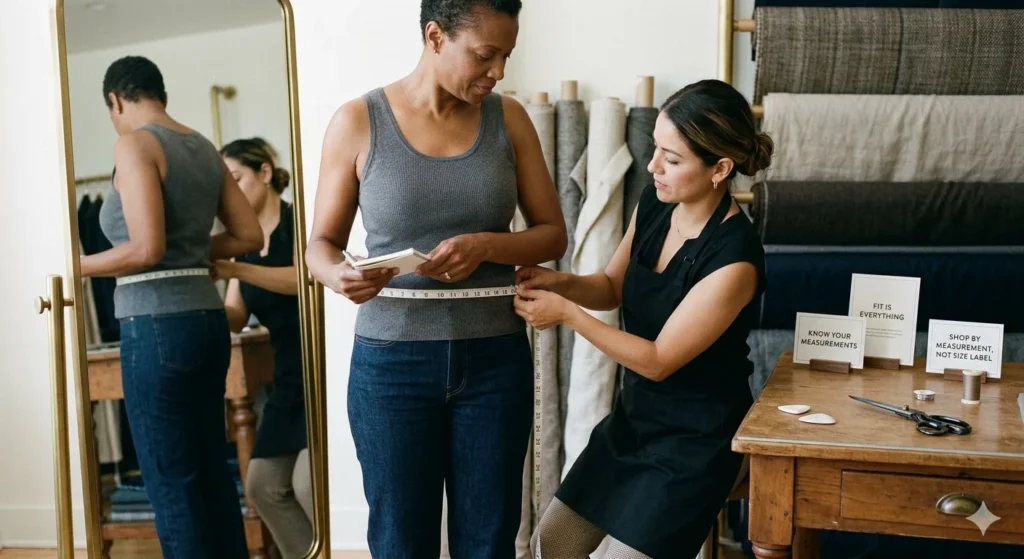
I ask every client to do this first, and it changes everything. Brand sizing is inconsistent — a size 16 in one store fits completely differently in another.
Take your bust, waist, and hip measurements once, and shop by measurement, not by size label. It saves you money on returns and saves your confidence from unnecessary disappointment.
Step 2: Prioritize Structure Over Volume
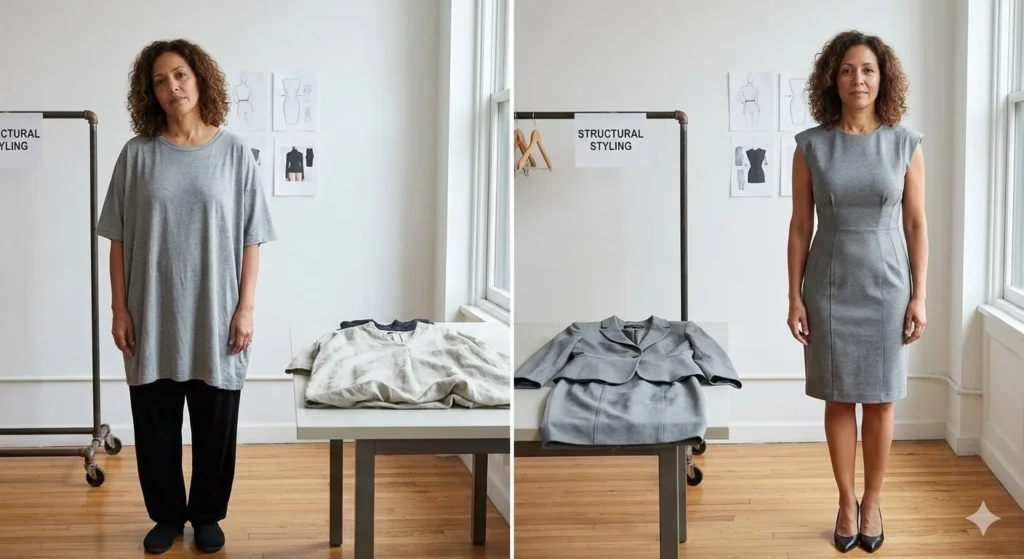
Loose, shapeless clothing doesn’t hide anything — it actually removes the visual definition your body already has. Structured pieces with a defined waist or shoulder line create shape, which reads as polished and intentional.
This is the single biggest shift I make with new clients. We don’t size up for comfort. We size correctly and choose fabric with stretch instead.
Step 3: Master the Wrap Silhouette
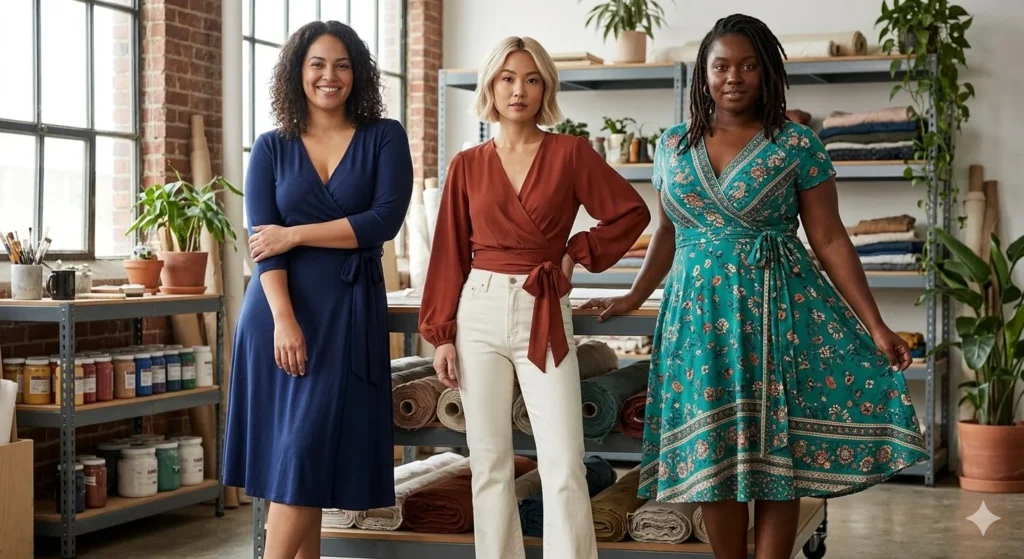
A wrap dress or wrap top does something almost no other silhouette can: it creates a defined waistline on literally any body shape, because it adjusts to you instead of forcing you into a fixed shape.
Keep at least one wrap piece in your wardrobe at all times. It’s the most reliable “I have nothing to wear” solution that exists.
Step 4: Build Vertical Movement Into Every Outfit
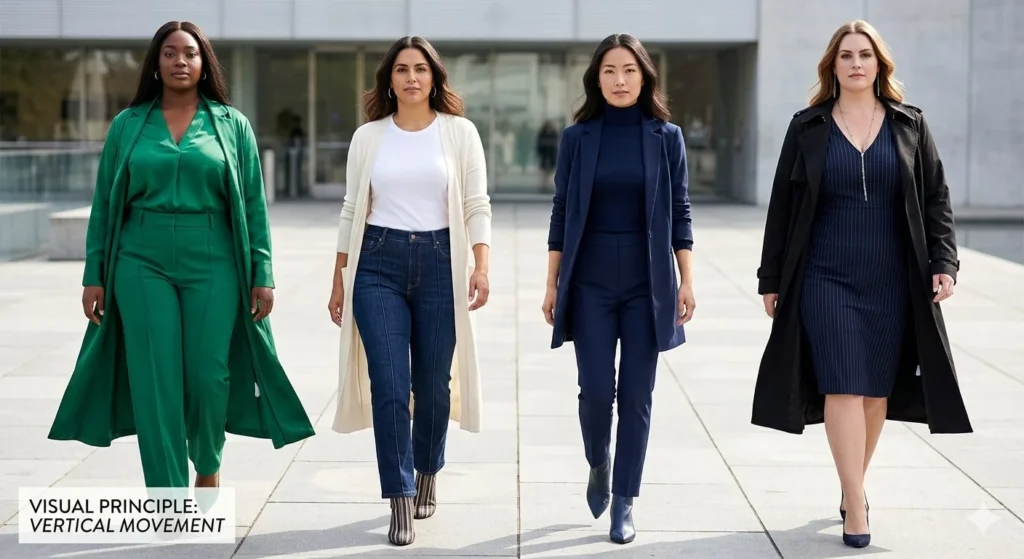
Long cardigans, vertical seam details, monochrome outfits, and V-necklines all create a continuous vertical line the eye follows. This is a well-documented visual perception effect, not a trend — and it works regardless of body size.
Step 5: Use Accessories to Direct Attention
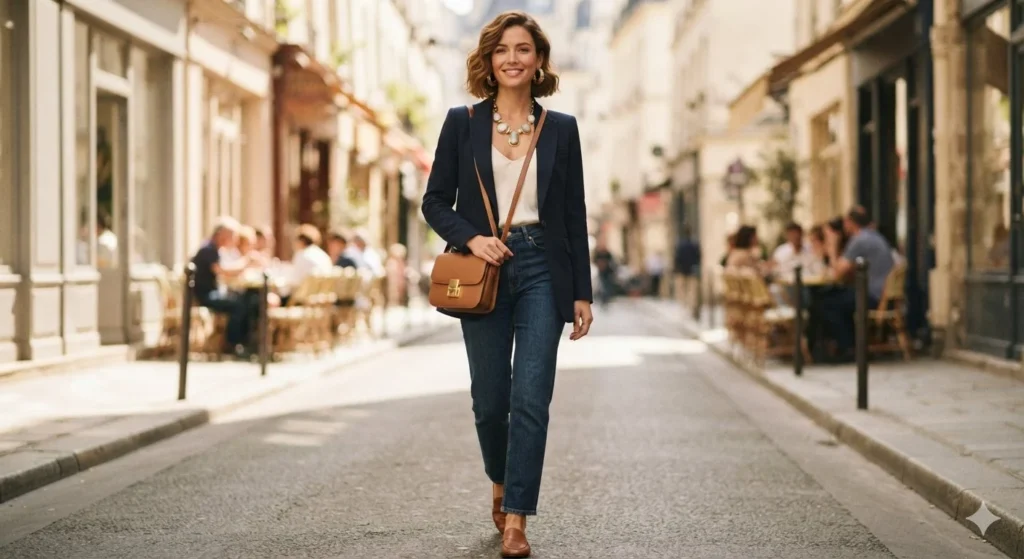
A statement necklace draws the eye upward. A structured bag at the hip creates a focal point at the waist. Bold earrings frame the face. Accessories aren’t decoration — they’re tools that control where people look first.
Optical Tricks & Pro Styling Hacks
- V-necklines elongate the torso more effectively than any other neckline shape
- Monochrome dressing (one color head to toe) creates an unbroken vertical line that reads as taller and more streamlined
- Rule of thirds over rule of halves — style your outfit so one piece is roughly two-thirds the length of the other, instead of splitting your body visually in half
- Structured shoulders balance wider hips by creating symmetry at the top of the silhouette
- Dark wash denim with a slight boot-cut balances proportions better than skinny styles for most curvier body types
Surprising Facts & Science Behind Flattering Fit
- Visual perception research confirms that unbroken vertical lines are processed by the brain as “longer,” which is exactly why monochrome outfits create a lengthening effect regardless of actual body size
- Fabric with 3-5% spandex maintains its shape 40% longer than fabric with zero stretch, according to textile durability studies — which is why fit holds up better in ponte knits and structured cotton blends
- Color contrast placement affects focal point perception — placing a brighter color or bold pattern at the area you want noticed (like a statement top) draws attention there first, before the eye moves anywhere else
- The “horizontal stripe myth” has been directly tested in fashion perception studies, and stripe width and placement matter far more than the mere presence of a horizontal line — thin, evenly spaced stripes read completely differently than wide block stripes
Frequently Asked Questions
What is the most flattering silhouette for plus-size body types? The wrap silhouette is the most universally flattering option because it creates a defined waistline that adjusts naturally to any body shape.
Should plus-size individuals avoid horizontal stripes? No. Stripe width and placement matter far more than the stripe direction itself — thin, evenly spaced stripes can be just as flattering as vertical ones.
What fabric should I prioritize when building a plus-size wardrobe? Look for structured cotton blends or ponte knit with 3-5% spandex. This combination holds its shape longer and maintains a polished fit throughout the day.
Is sizing up for comfort a good styling strategy? Not usually. Sizing correctly and choosing fabric with stretch creates better shape and structure than sizing up, which tends to remove definition rather than add comfort.
Final Thoughts
Every client I’ve worked with eventually reaches the same realization: the goal was never to disappear into their clothes. It was to find pieces that actually fit the body they already have.
Plus size fashion tips aren’t about following a list of rules — they’re about understanding proportion, fabric, and fit well enough to make intentional choices instead of fearful ones.
Start with one wrap dress and one structured blazer. Build from there. You’ll be surprised how much confidence comes from clothes that were actually made to fit you.